 VoxEasy

Frequently asked questions
Who runs this site?
VoxEasy operates as an independent storefront for the VoxEasy text-to-speech API. We are not affiliated with OpenAI, ElevenLabs, or other major tech brands. Our team manages the infrastructure, billing, and support for this specific service, ensuring a direct and transparent relationship with developers building assistive and elderly care applications.
Where do the voices come from?
Our eight voice presets are based on licensed recordings from LibriTTS-R, which uses public-domain audiobook readings from LibriVox. Each voice is a distinct preset designed for clarity. Every generated audio file includes an inaudible watermark to identify it as synthetic speech, ensuring transparency about the origin of the audio content.
Is my data safe?
Input text is used solely to produce the audio and is not used for training models. We retain request metadata, such as time, character count, and status, strictly for billing purposes. This ensures accurate usage tracking without compromising the privacy of the content you process through our API endpoints.
Do you store audio?
Generated audio is returned directly in the API response and is not stored on our servers. We only keep request metadata for billing and usage tracking. This means your synthesized speech files are transient, delivered to your application without long-term storage, reducing data retention risks for your elderly care projects.
How can I contact support?
Support is available via email only. We do not offer live chat or phone support. You can reach our team through the contact page or by emailing us directly. Please include your API key and details of your issue so we can assist you efficiently with your VoxEasy integration.
Is there a phone number?
No, we do not provide a phone number. All support interactions are handled via email. This approach allows us to maintain detailed records of your requests and provide written solutions that you can reference later. It also keeps our operational costs low, allowing us to offer competitive pricing for your API usage.
Are you affiliated with OpenAI?
We are not affiliated with OpenAI. Our API endpoint structure and SDK compatibility mimic OpenAI’s speech endpoint for ease of use, but we are a separate entity. Our voices, pricing, and infrastructure are entirely independent. We use the OpenAI SDK format by changing the base URL, but we do not use OpenAI’s models.
What is CC BY 4.0?
CC BY 4.0 is a Creative Commons license allowing reuse of the source recordings. Our voices are derived from LibriTTS-R, which uses this license. This means the underlying audio data is freely available for adaptation. We have built our specific voice presets upon this foundation, ensuring legal clarity for the source material.
Is the service guaranteed?
We do not offer an uptime guarantee or service level agreement (SLA). Requests are processed sequentially, so under load, a request may wait in a queue. Typical speed is roughly real-time. While we strive for reliability, we do not guarantee specific availability windows or performance metrics for our text-to-speech API.
Do you have an SLA?
No, we do not have a Service Level Agreement (SLA). There is no official uptime guarantee or enterprise contract. Our service is designed for no-code developers who need cost-effective, transparent pricing. We focus on delivering audio files reliably rather than offering complex infrastructure guarantees or financial compensation for downtime events.
Is the editorial team independent?
Yes, the VoxEasy editorial team is independent. We are not part of a larger tech conglomerate. Our content and product facts are managed directly by our team. We do not have affiliated reviews or paid endorsements from major brands. All information presented on this site reflects our actual product capabilities and pricing.
Can I trust the reviews?
You can verify our claims by testing the free trial or reviewing the transparent pricing and technical documentation provided.
What is the data policy?
Input text is used only to produce audio and is not used for training. Generated audio is returned in the response and not stored. Request metadata is kept for billing. We do not sell your data. This policy ensures that your text content remains private and is processed solely for the intended synthesis.
How do I revoke my key?
You can issue a new API key at any time from your account dashboard. When you generate a new key, the old one stops working immediately. This effectively revokes access for any applications using the previous key. You can manage your keys directly via the /get-api-key/ page without needing to contact support.
Our Mission

We built VoxEasy to bridge the gap between complex speech synthesis and accessible care technology. Our API delivers clear, reliable audio for assistive devices and elderly care applications.
Simplify TTS for care tech
We provide a straightforward text-to-speech API tailored for devices that need consistent, high-quality voice output. By removing infrastructure complexity, we enable developers to focus on patient interaction rather than audio engineering.
Focus on clarity and reliability

Our models prioritize intelligibility over entertainment. With eight distinct voice presets and support for 23 languages, we ensure that instructions and updates are understood clearly, even in noisy care environments or by users with hearing impairments.
Support no-code developers

Designed for simplicity, our API integrates easily into existing no-code workflows. We offer transparent pricing and clear documentation, allowing developers to deploy voice features without managing servers, scaling infrastructure, or handling complex billing cycles.
Voice Licensing
VoxEasy’s voice engine is built on licensed recordings from the LibriTTS-R dataset, providing a stable foundation for assistive device applications. We source these audio samples from LibriVox, which contains public domain audiobook readings. This ensures that the synthetic voices we generate are rooted in clear, high-quality human speech without complex licensing hurdles for our no-code users.
LibriTTS-R dataset
The LibriTTS-R dataset serves as the core source material for our eight voice presets. Each voice, from Aria to Orion, is derived from these licensed recordings. This dataset provides the acoustic diversity needed for speech synthesis.
CC BY 4.0 license
We utilize the Creative Commons Attribution 4.0 International (CC BY 4.0) license for the underlying voice data. This standard license allows us to process and synthesize the audio efficiently while maintaining transparency about our data sources. It supports our model of providing cost-effective API access without hidden royalty fees.
LibriVox public domain
The original recordings originate from LibriVox, a project dedicated to public domain audiobooks. Since the source material is in the public domain, we can reliably offer these voices as presets without worrying about restrictive usage terms. This simplifies compliance for developers building assistive technologies that need clear, legal speech outputs.
Data Policy
VoxEasy processes text-to-speech requests to generate audio files for assistive devices and care applications. We prioritize transparency and simplicity in how we handle your data during this generation process.
Input text not trained on
The text you submit for synthesis is used exclusively to produce the resulting audio file. We do not use your input text to train our models or improve voice algorithms, ensuring your content remains private.
Audio not stored
Generated audio files are returned directly in the API response and are not stored on our servers after delivery. This ensures that your synthesized speech is not retained for future use or analysis.
Metadata kept for billing
We retain request metadata, including timestamp, character count, and status, solely for accurate billing purposes. This data helps us track usage against your account balance without storing the actual audio content.
Service Limits

VoxEasy operates as a practical tool for assistive devices and elderly care applications, prioritizing clarity and reliability without enterprise-grade contractual obligations. We provide a transparent, cost-effective API tailored for no-code developers, ensuring you understand exactly what is included in the service.
No SLA guarantee
We do not offer a Service Level Agreement (SLA) or formal uptime guarantees. The API is designed for standard integration, but we do not contractually promise specific availability percentages or financial credits for downtime.
No uptime promise
Requests are processed sequentially and may queue under load, which can affect latency. While we strive for consistent performance, there is no official uptime promise, and peak usage times may result in slightly longer generation times for long texts.
Standard support hours
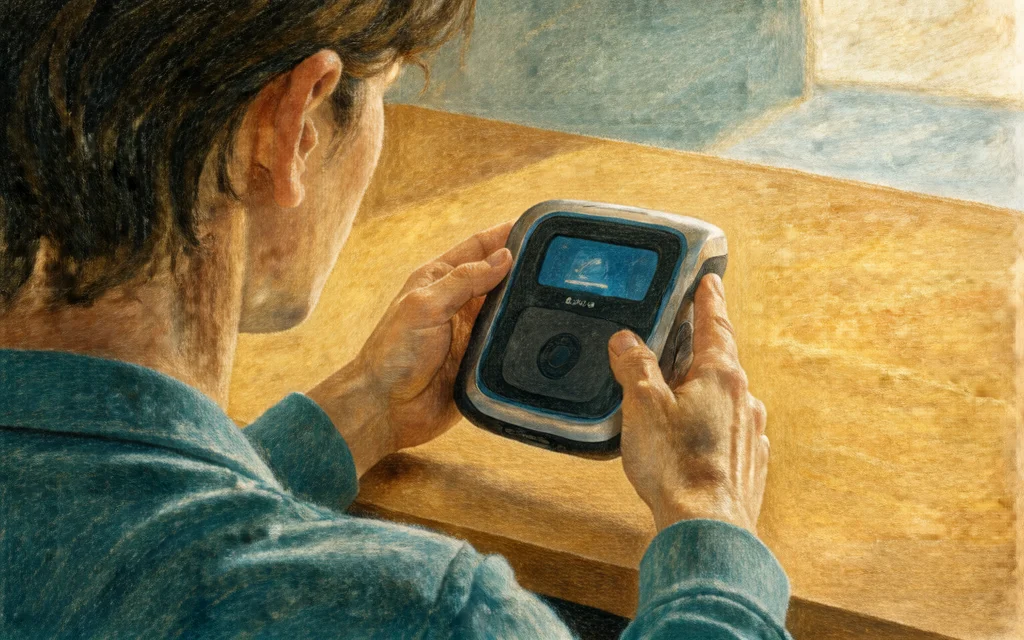
Support is handled exclusively via email. We do not provide a phone number or live chat. Responses are provided during standard business hours, ensuring direct communication without the delay of tiered support systems.
Support Contact

We keep communication straightforward to match our no-code, engineering-first approach. You can reach our team via email for any questions regarding the API, billing, or technical implementation.
Email support only
Send your inquiries to [email protected]. We aim to respond promptly to help you integrate TTS into your assistive devices or care applications without delay.
No phone number
We do not maintain a phone line. This allows us to focus resources on the API infrastructure and keep costs transparent for your projects.
No live chat
There is no real-time chat widget on our site. Email remains our single channel for support, ensuring every query is documented and addressed thoroughly.
Editorial Team

VoxEasy operates as an independent storefront. We focus on clarity and reliability for assistive device developers, ensuring our information remains specific to the needs of no-code engineers in elderly care.
Our team maintains strict editorial standards, reviewing technical details directly from API documentation rather than relying on third-party marketing materials. This ensures that every claim about pricing, voice quality, or data policy is verified against the live system state.
Independent editors
This structure prevents internal conflicts of interest from influencing how we describe service limitations or pricing tiers.
We prioritize engineering-focused descriptions over marketing narratives, ensuring that details about character limits and speed remain accurate for technical integration.
Honest reviews
Reviews are based on direct API testing and documented specifications.
Each review highlights both capabilities and constraints, such as the lack of streaming or custom voice cloning, to help developers make informed architectural decisions.
No affiliate bias
We do not receive commissions for recommending specific hosting providers or development tools. Our recommendations are driven by technical suitability for assistive applications.
Listen to the 8 voices
Each sample below was generated by this API from the same sentence. His tone is upbeat, making him suitable for time-sensitive notifications where attention must be grabbed immediately.


23 languages
Any voice speaks any of these languages.
Sources and further reading
- Wikipedia
- Python documentation
- W3C WAI: making audio and video accessible
- Node.js documentation
- TRON developer hub: TRC-20
- ISO 639 language codes
- OpenAI API reference: create speech
- LibriTTS-R corpus (OpenSLR 141)
- Creative Commons Attribution 4.0
- LibriVox public-domain audiobooks
- openai-python on GitHub
- curl documentation
